An online casino is more than a website offering slots, roulette, blackjack, and other games. Behind every legitimate gambling platform, there should be a clear legal framework governing its operations. One of the most important elements of this framework is an online casino license.
But why do casinos need licenses? Does having a license guarantee fair games? And how can players verify whether an online casino is properly regulated?
Understanding casino licensing helps players make more informed decisions and recognize the difference between regulated gambling platforms and websites operating without appropriate authorization.
What Is an Online Casino License?
An online casino license is an official authorization issued by a gambling regulatory authority. It permits an operator to provide specified gambling services under the rules of the issuing jurisdiction.
Depending on the regulatory framework, a license may cover online slots, table games, live dealer games, sports betting, or other gambling activities.
Casino licensing generally serves several purposes:
Establishing legal requirements for gambling operators.
Promoting fairness and transparency in casino games.
Supporting player protection and responsible gambling.
Setting standards for financial transactions and security.
Providing regulatory supervision and enforcement.
However, an important distinction exists: holding a license from one jurisdiction does not automatically authorize a casino to accept players from every country. Local gambling laws and market-specific requirements still apply.
Why Is Casino Licensing Important?
Casino licensing helps create a structured environment in which gambling operators must meet defined standards.
Without regulatory oversight, players may have fewer protections concerning game fairness, withdrawals, personal information, and complaints.
1. Protecting Players
One of the primary goals of gambling regulation is to support player protection.
Depending on the jurisdiction, licensed casinos may be required to implement measures such as:
Age verification procedures.
Responsible gambling tools.
Clear bonus terms and conditions.
Transparent withdrawal policies.
Customer complaint procedures.
Measures to identify suspicious transactions.
These requirements help establish expectations for how casinos should treat their customers.
For example, players should be able to understand wagering requirements before accepting a casino bonus rather than discovering important restrictions when requesting a withdrawal.
2. Supporting Fair Casino Games
Fairness is essential to online gambling.
Many casino games rely on a Random Number Generator (RNG), which produces outcomes according to the game’s mathematical design.
Licensing frameworks commonly establish technical requirements covering game integrity, RNG testing, and return-to-player information.
Independent testing laboratories may evaluate gambling software to confirm that it meets applicable technical standards.
However, a casino license does not mean every player has an equal chance of winning or that winning is guaranteed.
Casino games still have mathematical rules, house edges, and varying levels of volatility. Fairness means that games operate according to their approved design rather than promising profitable results.
3. Improving Financial Transparency
Online casinos process deposits, withdrawals, and other financial transactions.
Regulatory requirements may include controls for:
Anti-money laundering (AML).
Know Your Customer (KYC) verification.
Financial recordkeeping.
Fraud prevention.
Protection of player balances.
Monitoring suspicious activity.
These procedures can help reduce financial crime and support more accountable casino operations.
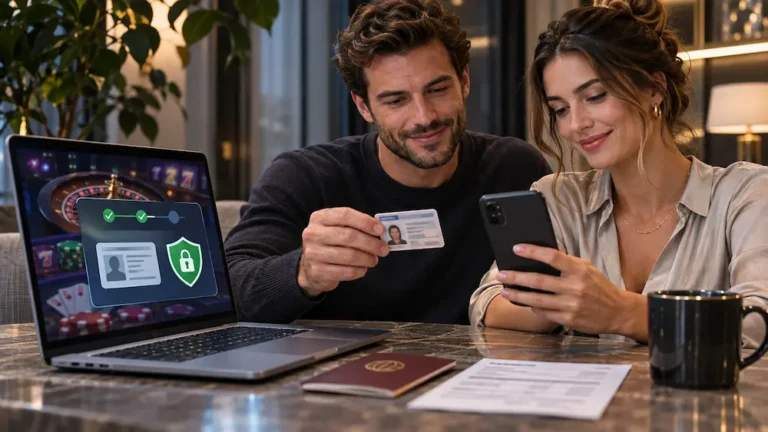
For instance, a casino may request identity documents before processing certain withdrawals. Such checks can support regulatory compliance, although the exact requirements depend on the operator and jurisdiction.
4. Encouraging Responsible Gambling
Gambling should remain a form of entertainment rather than a financial strategy.
Depending on the applicable rules, licensed operators may need to provide tools that help players control their gambling activity.
Common responsible gambling features include deposit limits, cooling-off periods, self-exclusion options, and access to gambling support resources.
Regulators may also establish requirements concerning advertising, age restrictions, and the treatment of vulnerable customers.
These measures do not eliminate gambling-related risks, but they can provide important safeguards.
Who Issues Online Casino Licenses?
Casino licenses are issued by gambling authorities operating under specific legal frameworks.
Different regulators have different licensing requirements, enforcement powers, and territorial scopes.
Some well-known gambling regulatory authorities include:
| Regulatory authority | Jurisdiction |
|---|---|
| Malta Gaming Authority (MGA) | Malta |
| UK Gambling Commission (UKGC) | Great Britain |
| Gibraltar Gambling Commissioner | Gibraltar |
| Tobique Gaming Commission (TGC) | Tobique First Nation |
| Isle of Man Gambling Supervision Commission | Isle of Man |
A regulator’s responsibilities may include reviewing license applications, supervising operators, investigating regulatory breaches, and imposing penalties.
The exact scope of these powers varies between jurisdictions.
For example, the UK Gambling Commission requires operators serving consumers in Great Britain to hold the appropriate British license, even when the gambling company is based elsewhere.
How Does an Online Casino Obtain a License?
Receiving a gambling license is generally a multi-stage process.
Although requirements differ, the application process commonly includes several important steps.
Business Verification
Regulators may examine company ownership, management, business structure, and the background of relevant individuals.
This helps determine whether an operator meets the licensing authority’s suitability requirements.
Financial Assessment
Applicants may need to demonstrate that they have sufficient financial resources to operate their gambling business and meet relevant obligations.
Some jurisdictions require information about the source of company funds and financial projections.
Technical Compliance
Casino platforms and games may undergo technical assessments.
These can include software testing, RNG evaluations, cybersecurity checks, and reviews of gaming system reliability.
Responsible Gambling Policies
Operators may need to demonstrate that they have policies for age verification, customer protection, responsible gambling, and complaint handling.
Ongoing Compliance
Obtaining a license is not necessarily the end of the process.
Licensed casinos may remain subject to audits, reporting obligations, monitoring, and regulatory investigations.
Failure to comply with licensing requirements can result in penalties, restrictions, suspension, or revocation of a license.
What Happens if an Online Casino Operates Without a License?
An unlicensed casino operates without the relevant authorization from a gambling regulator.
This can create significant risks for both players and operators.
Potential problems include unclear withdrawal procedures, insufficient transparency, limited complaint options, and the absence of meaningful regulatory supervision.
Operators may also face legal consequences when they provide gambling services in markets where appropriate licensing is mandatory.
Players should understand that the presence of a license is an important consideration, but its legitimacy, validity, and geographic scope also matter.
A license displayed on a website does not automatically establish that the casino is permitted to operate in the player’s location.
How Can Players Check an Online Casino License?
Before registering or depositing money, players can perform several basic checks.
Step 1: Find the licensing information.
Casino websites commonly display regulatory information in their footer or legal information pages.
Step 2: Identify the licensed company.
Check the legal entity responsible for operating the casino, rather than relying only on the website’s brand name.
Step 3: Verify the regulator.
Visit the official website of the licensing authority and look for a public license register or verification service.
Step 4: Check license details.
Where information is available, verify the company name, license status, authorized activities, and associated website.
Step 5: Review local gambling laws.
Confirm that using the casino is permitted in your location. A foreign gambling license does not necessarily satisfy local regulatory requirements.
Taking these steps can help players distinguish legitimate licensing information from unsupported claims.
Casino Licensing at WildTornado
At WildTornado Casino, licensing is part of the legal framework under which the platform operates.
WildTornado is operated by Novatrix S.R.L., a company registered in Costa Rica, under the Tobique Gaming Commission licensing framework.
The Tobique Gaming Commission was established under the Tobique Gaming Act 2023, which provides a framework for licensing and regulating remote gaming activities.
Tobique Gaming Commission+1
The regulator’s published license-holder register includes Novatrix S.R.L. among its B2C license holders.
Tobique Gaming Commission
Players should always review the casino’s current terms and conditions, responsible gambling information, and applicable territorial restrictions before using the platform.
A license provides a regulatory framework, but players should still approach gambling responsibly and understand the risks involved.
Does a Casino License Guarantee Safety?
A license is an important indicator of regulatory oversight, but it is not an absolute guarantee of safety.
Even licensed online casinos may experience technical problems, payment delays, or customer disputes.
The strength of consumer protection also depends on the regulator, applicable laws, and enforcement procedures.
Therefore, players should evaluate several factors together: the validity of the gambling license, transparency of terms, financial policies, security practices, and availability of customer support.
A regulated casino environment can provide additional safeguards, but it cannot remove the financial risks associated with gambling.
Conclusion: Why a Gambling License Matters
An online casino license is much more than a legal formality.
It establishes a framework for accountability, game integrity, financial controls, player protection, and responsible gambling.
For casino operators, licensing creates obligations and provides a defined regulatory structure. For players, it offers a way to assess whether a platform operates under recognized rules and supervision.
Before choosing an online casino, checking its license and understanding its conditions should be part of the decision-making process.
At WildTornado Casino, players can explore online casino entertainment while reviewing the platform’s published legal information and responsible gambling policies.
Remember that gambling involves financial risk. Play only if you are of legal gambling age in your jurisdiction, set personal limits, and never gamble with money you cannot afford to lose.
FAQ: Online Casino Licensing
Why do online casinos need a license?
Online casinos need licenses to operate under a defined regulatory framework. Licensing helps establish standards for game fairness, financial controls, responsible gambling, and player protection.
Is it safe to play at a licensed online casino?
A valid gambling license provides regulatory oversight and may offer additional player protections. However, licensing does not eliminate financial risks or guarantee that a casino will never experience technical or payment problems.
How can I verify an online casino license?
Check the casino’s legal information and identify its operating company and licensing authority. Then visit the regulator’s official website to verify the license status, where a public register or verification service is available.
Can an online casino operate without a license?
Operating without the required gambling license may violate applicable laws. Unlicensed casinos can also expose players to additional risks, including limited regulatory protection and unclear dispute resolution procedures.
Does a casino license guarantee fair games?
A license may require compliance with game fairness standards, including independent testing of gambling software. However, it does not guarantee winning outcomes, and casino games still have a mathematical house edge.
Does one gambling license cover every country?
No. A gambling license issued in one jurisdiction does not automatically authorize an online casino to serve players worldwide. Local laws and additional licensing requirements may apply.
Who regulates WildTornado Casino?
WildTornado Casino is operated by Novatrix S.R.L. under the Tobique Gaming Commission licensing framework. Players can review the casino’s legal information and consult the regulator’s official license-holder register.
Author

 I am the Director of a company that specializes in providing a range of services including marketing analytics, web design, email marketing, content creation, and graphic design. With over 13 years of experience in analytics and marketing, I have successfully managed teams and developed strategies that cater to various client needs. My role involves overseeing projects, ensuring quality service delivery, and driving business growth through effective marketing solutions.

 I am the Director of a company that specializes in providing a range of services including marketing analytics, web design, email marketing, content creation, and graphic design. With over 13 years of experience in analytics and marketing, I have successfully managed teams and developed strategies that cater to various client needs. My role involves overseeing projects, ensuring quality service delivery, and driving business growth through effective marketing solutions.