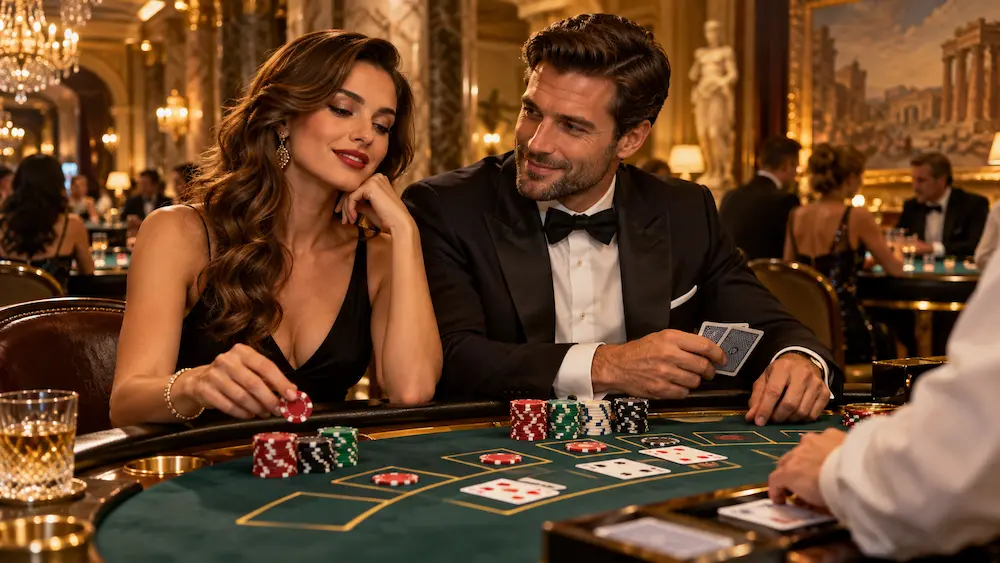
history of blackjack
The History of Blackjack: How the Game Evolved Over Centuries
Blackjack is one of the most recognizable card games in the casino world. Its combination of simple rules, strategic decisions, and unpredictable outcomes has attracted players for generations. But the history of blackjack stretches far beyond modern casinos and digital gaming platforms.
From European card games played centuries ago to the sophisticated live dealer tables available today, blackjack has experienced a remarkable transformation. Understanding its origins reveals how a relatively simple game of reaching 21 became an international casino classic.
Where Did Blackjack Originate?
The exact origins of blackjack remain uncertain, but historians generally trace its development to European card games involving numerical totals.
One of the earliest documented references to a game resembling blackjack appears in the work of Spanish author Miguel de Cervantes.
His story Rinconete y Cortadillo, written around 1601–1602 and published in 1613, describes characters playing a card game called veintiuna, meaning Twenty-One.
The objective was familiar: reach 21 points without exceeding that number. Aces could count as either one or eleven, a fundamental rule that remains part of modern blackjack.
This historical reference suggests that variations of Twenty-One were already being played in Europe during the early seventeenth century.
The French Influence: Vingt-et-Un
During the eighteenth century, a game known as Vingt-et-Un, French for Twenty-One, became established in European card-playing culture.
Although its rules differed from those of modern blackjack, the central objective was similar: achieve a strong hand without exceeding 21.
Early versions sometimes featured different betting procedures, dealer privileges, and payout arrangements.
As the game spread between European countries, local variations developed. Over time, these traditions helped shape the recognizable structure of modern blackjack.
How Blackjack Arrived in America
During the nineteenth century, Twenty-One became part of American gambling culture.
The game appeared in gambling establishments and gradually developed rules and customs distinct from its European predecessors.
Unlike games determined entirely by a single random outcome, Twenty-One allowed players to make decisions about whether to request additional cards or stop.
This combination of chance and decision-making helped establish its lasting appeal.
By the late nineteenth and early twentieth centuries, the American version was becoming increasingly recognizable under the name blackjack.
Why Is the Game Called Blackjack?
One of the most interesting questions in blackjack history concerns the origin of its name.
According to a popular explanation, American gambling establishments once offered a special 10-to-1 payout for a hand containing the ace of spades and a black jack, either the jack of clubs or the jack of spades.
The combination supposedly became known as a blackjack, and the name remained after the special payout disappeared.
However, this explanation is disputed.
Card historian Thierry Depaulis has questioned the historical evidence supporting that promotional payout. An alternative theory connects the term blackjack with prospectors during the Klondike Gold Rush in the late nineteenth century.
Although the precise origin remains debated, the name blackjack eventually replaced Twenty-One as the dominant name for the game in American casinos.
Blackjack and the Rise of Las Vegas
The development of modern casino gambling marked another important chapter in blackjack history.
When Nevada legalized casino gambling in 1931, the industry gained an environment in which organized casino games could expand.
Blackjack became a familiar attraction in Las Vegas casinos.
Over subsequent decades, gambling establishments refined table rules, betting procedures, and dealer practices.
Several important features became increasingly standardized:
Players competing against the dealer rather than one another.
The option to hit, stand, double down, or split pairs.
Standardized payouts for winning hands.
Defined dealer rules and table betting limits.
These developments helped establish blackjack as a central part of the casino experience.
The Mathematical Revolution of Blackjack
Blackjack history changed significantly during the twentieth century when mathematicians began studying the game scientifically.
The Birth of Basic Strategy
In 1956, Roger Baldwin, Wilbert Cantey, Herbert Maisel, and James McDermott published a mathematical study titled The Optimum Strategy in Blackjack.
Their research examined how different playing decisions affected expected results.
This work provided an important foundation for modern blackjack basic strategy.
Basic strategy uses mathematical probabilities to identify the most advantageous available action based on the player’s hand and the dealer’s visible card.
Although following basic strategy cannot guarantee a win, it can reduce the casino’s mathematical advantage under a given set of rules.
Edward Thorp and Card Counting
In 1962, mathematician Edward O. Thorp published Beat the Dealer, bringing systematic card-counting methods to a wider audience.
Card counting involves tracking the relative concentration of high and low cards remaining in the deck.
Under certain conditions, this information can help players estimate when the composition of the remaining cards becomes more favorable.
Thorp’s work demonstrated that blackjack was not simply a game of instinct. Mathematical analysis could influence the decisions players made at the table.
Casinos subsequently introduced or expanded countermeasures, including multiple-deck games, more frequent shuffling, and restrictions on players suspected of counting cards.
The Evolution of Blackjack Variations
As blackjack spread internationally, different versions of the game emerged.
Some variations introduced additional betting opportunities, while others modified rules governing the dealer, splitting, or doubling down.
Popular blackjack variations include:
| Blackjack Variation | Main Characteristic |
|---|---|
| Classic Blackjack | Traditional gameplay focused on reaching 21 |
| European Blackjack | Commonly uses two decks and distinct dealer hole-card procedures |
| American Blackjack | Typically features a dealer hole card |
| Spanish 21 | Uses decks with the ten-spot cards removed and offers special rules |
| Blackjack Switch | Allows players to exchange selected cards between two hands |
| Pontoon | A related Twenty-One game with different terminology and rules |
Each variation offers a different experience, but all remain connected to the historical concept of Twenty-One.
Exact rules and payouts depend on the particular game.
The Beginning of Online Blackjack
The emergence of internet casinos during the 1990s introduced blackjack to a new generation of players.
Instead of visiting a physical casino, users could access digital versions of traditional card games through computer software.
Early online blackjack games relied on random number generators, or RNGs, to produce randomized card outcomes.
As technology developed, online casinos introduced improved interfaces, additional blackjack variations, and mobile compatibility.
Digital blackjack also made it easier to offer games with different betting limits and table formats.
How Live Dealer Blackjack Changed the Experience
The introduction of live dealer technology marked another major development.
Live blackjack combines online participation with a physical table operated by a professional dealer.
Players can watch the cards being dealt through a video stream and make their decisions using digital controls.
Modern live blackjack platforms may feature multiple camera angles, interactive interfaces, and dedicated gaming studios.
This format helped connect the atmosphere of traditional casino tables with the convenience of online gaming.
At platforms such as WildTornado Casino, blackjack enthusiasts can explore casino entertainment in a modern digital environment, subject to the games available in their jurisdiction.
Blackjack History Timeline
The development of blackjack can be summarized through several significant milestones.
| Period | Historical Development |
|---|---|
| Early 1600s | Spanish literature documents a game resembling Twenty-One |
| 1700s | Vingt-et-Un becomes established in European card-playing culture |
| Early 1800s | Twenty-One appears in American gaming |
| Late 1800s | The name blackjack begins gaining recognition |
| 1931 | Nevada legalizes casino gambling |
| 1956 | Researchers publish a mathematical blackjack strategy study |
| 1962 | Edward Thorp publishes Beat the Dealer |
| 1990s | Internet casinos begin offering digital blackjack |
| 2000s onward | Live dealer and mobile blackjack become increasingly widespread |
Why Blackjack Remains Popular Today
Blackjack has survived centuries of changing entertainment trends because its essential mechanics are both accessible and engaging.
New players can quickly understand the objective: build a stronger hand than the dealer without exceeding 21.
More experienced players can study probability, basic strategy, and the effect of different table rules.
The game also offers several distinctive qualities:
Simple objectives: The central goal is easy to understand.
Strategic decisions: Player choices can influence expected outcomes.
Multiple variations: Different rules provide alternative experiences.
Social interaction: Traditional and live dealer tables offer opportunities to interact with dealers and other players.
Digital accessibility: Online platforms provide different ways to experience the game.
Nevertheless, blackjack remains a gambling game involving financial risk. Even mathematically informed decisions cannot eliminate uncertainty or guarantee profitable results.
Conclusion
The history of blackjack demonstrates how a traditional European card game evolved into one of the most recognizable casino games worldwide.
From early references in Spanish literature and the popularity of French Vingt-et-Un to Las Vegas casinos, mathematical strategy, and online gaming, blackjack has continually adapted to changing cultures and technologies.
Its lasting appeal comes from the relationship between chance and decision-making.
Today, blackjack continues to connect centuries of gaming tradition with modern casino entertainment.
Frequently Asked Questions About Blackjack History
Where did blackjack originate?
Blackjack developed from European card games known as Twenty-One. One of the earliest documented references appears in Spanish literature from the early seventeenth century. The modern game later evolved through European and American variations.
Who invented blackjack?
No single person is credited with inventing blackjack. The game developed gradually from older European card games, particularly Spanish Twenty-One and French Vingt-et-Un.
Why is blackjack called blackjack?
A popular story connects the name to a special payout for an ace of spades and a black jack. However, historians dispute this explanation, and the exact origin of the name remains uncertain.
When did blackjack become popular in America?
Twenty-One appeared in America during the nineteenth century. Blackjack became increasingly established in American casino culture during the twentieth century, particularly after Nevada legalized casino gambling in 1931.
Who developed blackjack basic strategy?
Roger Baldwin, Wilbert Cantey, Herbert Maisel, and James McDermott published a foundational mathematical study of blackjack strategy in 1956. Edward Thorp later expanded public interest in blackjack mathematics and card counting.
How has blackjack changed over time?
Blackjack evolved from European Twenty-One games into standardized casino blackjack. New variations, mathematical strategies, online platforms, and live dealer technology have continued to transform the game.
When was online blackjack introduced?
Online blackjack emerged during the 1990s as internet casinos began offering digital versions of traditional table games. Later developments introduced mobile blackjack and live dealer experiences.
Author

 I am the Director of a company that specializes in providing a range of services including marketing analytics, web design, email marketing, content creation, and graphic design. With over 13 years of experience in analytics and marketing, I have successfully managed teams and developed strategies that cater to various client needs. My role involves overseeing projects, ensuring quality service delivery, and driving business growth through effective marketing solutions.

 I am the Director of a company that specializes in providing a range of services including marketing analytics, web design, email marketing, content creation, and graphic design. With over 13 years of experience in analytics and marketing, I have successfully managed teams and developed strategies that cater to various client needs. My role involves overseeing projects, ensuring quality service delivery, and driving business growth through effective marketing solutions.